Restart a Knitting Project After a Break
Identify the setup, reconcile the saved count with the fabric and resume from a verified instruction.
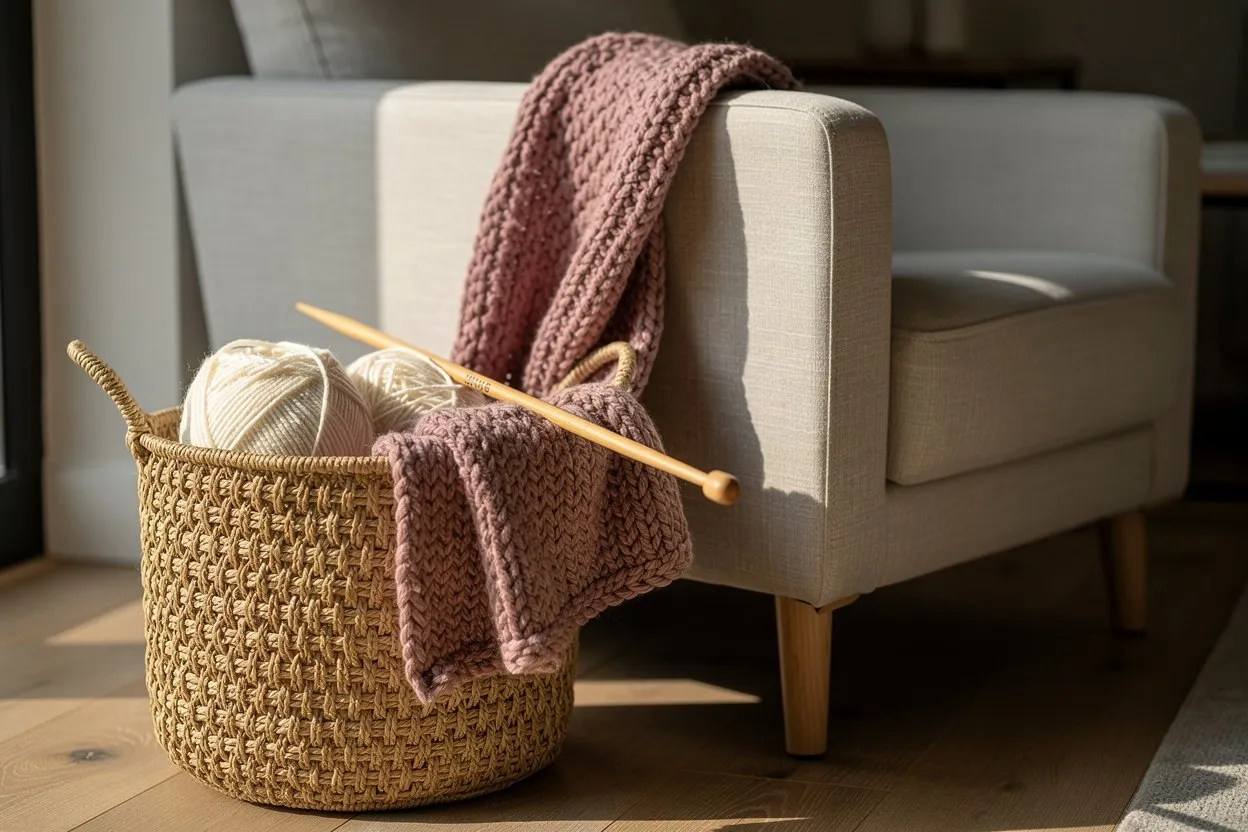
Returning to a knitting project after a break can feel like inheriting someone else’s work. Resist the urge to knit several rows while hoping the pattern becomes familiar. First identify the materials and instructions, then establish what has actually been completed. A short review is usually easier than undoing work that began from an assumed starting point.
Gather the original context
Find the pattern, selected size, yarn label and any project notes. Check the needles against the recorded setup. If the tools have been borrowed for another project, do not assume the pair now in the bag is the one originally used.
Read the relevant section of the instructions again, including any notes about repeats, shaping or stitch markers. Look for recorded modifications. A saved line explaining a deliberate change may account for a difference that otherwise looks like an error.
Inspect the work before trusting the counter
Open the named project in the row counter and read the saved progress as evidence, not proof. Compare it with the fabric and any markers. Check whether the count refers to the entire piece, the current section or a repeat sequence.
If you cannot reconcile the number, pause and investigate using the pattern and a suitable reference or experienced help. Avoid changing the counter until you understand the difference. A guessed number can make the project look organized while moving the uncertainty into the next session.
Verify the next instruction
Identify the last completed action and the next action separately. If the note says a row was started rather than finished, inspect where the work stopped. Confirm the working direction and the role of any markers before continuing.
For a repeating pattern, work out the next row within the repeat rather than only the overall total. If shaping is involved, confirm the sequence against the instructions. This is particularly important when an increase or decrease occurs at intervals that a simple counter cannot interpret automatically.
Resume with a short, checked section
Work a manageable amount, then compare the new fabric with the established section. Your tension may feel different after a long pause, so notice whether the fabric changes noticeably. If the project depends on precise sizing, review the gauge and pattern guidance rather than assuming the old measurement still describes your current work.
Record the verified restart point and update the counter only as work is completed. The gauge calculator can help with basic ratios if you need to understand a measurement, but it cannot resolve a construction error or identify an unknown pattern row. Before putting the project away again, write one clear next-step note and keep the materials together. The goal is to replace uncertainty with a small set of checked facts, then return to the enjoyable part of making the piece.