Read a Yarn Label Before You Start Knitting
Find yarn identity, length, weight, dye lot and care information, and keep the details with your project.
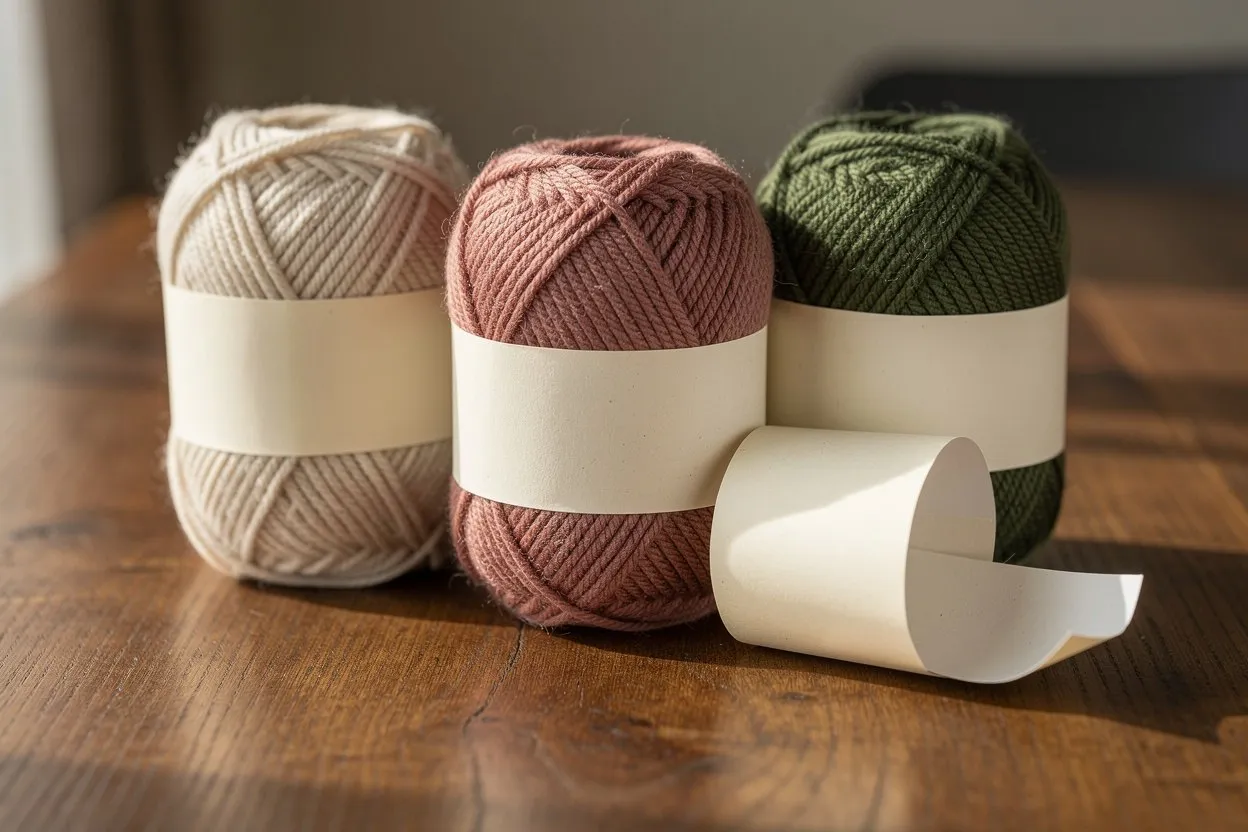
A yarn label is a compact project record. It can tell you what the yarn is, how much is in the ball and how the finished fabric should be cared for. These details are easy to lose once the band is removed. Before casting on, read the label and keep a photo or the original with your project notes so you can identify the material later.
Separate yarn thickness from ball weight
The weight of a ball, such as grams or ounces, describes how much it weighs. A yarn weight category describes a thickness grouping. They are not the same measurement. Two balls can weigh the same but contain very different lengths of yarn, particularly when their fibres or construction differ.
Record both the stated length and the ball weight when comparing products. A pattern’s material requirement cannot always be met by buying the same number of balls in another yarn. Compare the total length, the intended fabric and the pattern’s guidance, then make a sample before assuming the substitution will work.
Treat suggested needles as a starting point
The needle size and gauge information on a label help describe a possible fabric, but your own knitting may differ. The pattern may also call for a different texture or gauge. Use the label alongside the pattern rather than choosing one and ignoring the other.
The Craft Yarn Council’s reading guidance explains the role of gauge and pattern information. In practice, make a sample in the relevant stitch pattern and measure your own result. A label cannot predict your individual tension or what happens after the fabric is washed.
Keep the identity and lot information
Save the brand, product name, color identifier and any dye-lot information. Similar-looking balls are not necessarily identical. If a project needs several balls, ask the supplier about lot consistency and follow the pattern or manufacturer guidance when combining them.
Do not discard the band because the color seems memorable. A name can be reused or a shade can look different in another light. The exact identifiers are more useful than a note such as “blue wool,” especially if you later need to replace a ball or explain the material to someone caring for the finished item.
Read care instructions before making the sample
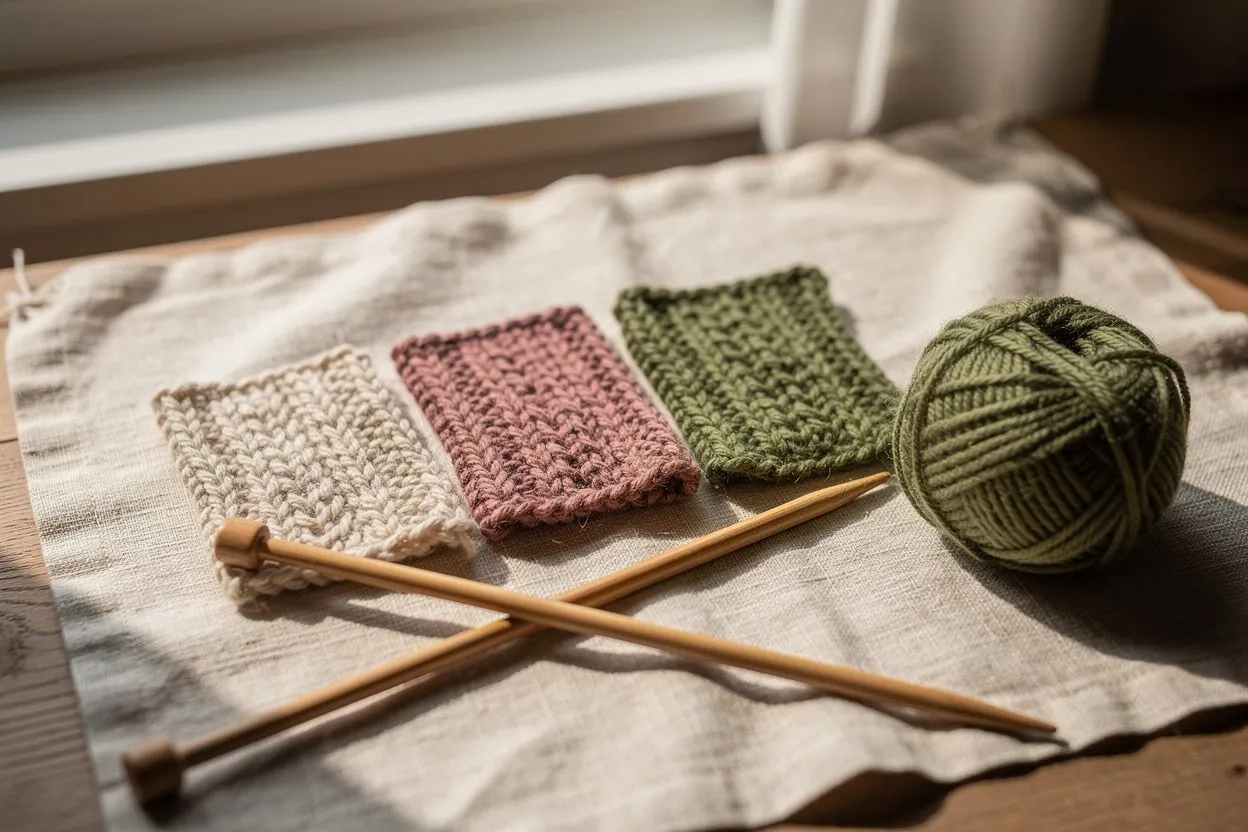
Follow the label’s care information when washing and drying the swatch, along with any relevant pattern instructions. Measuring only the unwashed fabric may not describe the finished item’s dimensions. If symbols are unfamiliar, consult the yarn manufacturer’s explanation rather than guessing from the shape.
Record the label details with your project and use the row counter to keep progress separate from material information. For simple sizing work, enter your measured gauge in the gauge calculator. When the item is finished, retain the care instructions in a form you can pass to its recipient. The label remains useful long after the last stitch, particularly when the finished object no longer looks like the original ball of yarn.