Count Knitting Rows With a Consistent Rule
Choose when to advance your row counter, keep sections distinct and recover your place after an interruption.
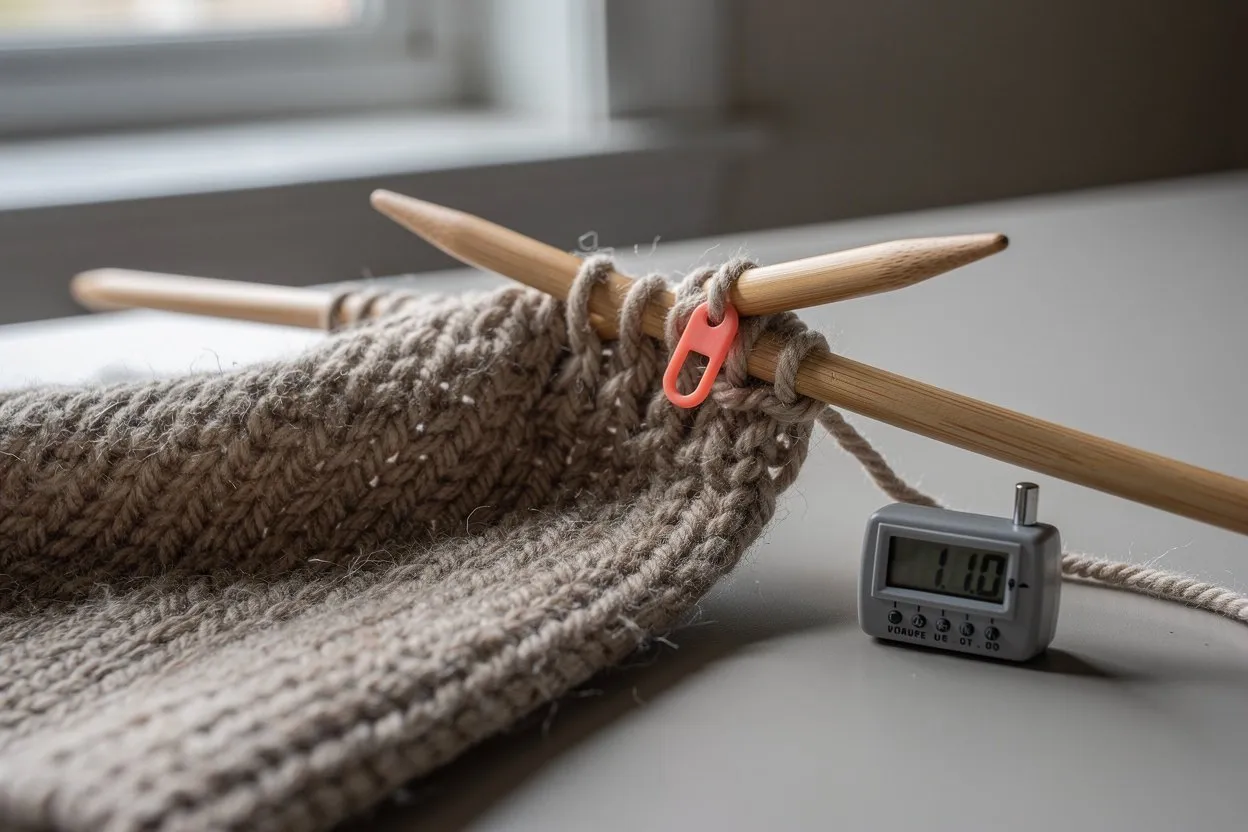
A row counter is most useful when you decide exactly what one click means. If you sometimes count before working a row and sometimes after it, the displayed number becomes ambiguous. Establish one routine, connect the count to the pattern section and add a short note when the work is more complicated than a single sequence of identical rows.
Count completed rows consistently
One practical rule is to advance the counter only after completing a row. That makes the displayed number a record of finished work. If your pattern uses another convention, write that convention down and follow it throughout the project. The important point is consistency rather than choosing a rule because it sounds universally correct.
For flat knitting, a row is generally one pass across the stitches. A round in circular knitting is a different unit of progress. Label the project accordingly so you do not carry a flat-knitting habit into a pattern that counts rounds or repeats differently.
Keep section counts distinguishable
A pattern may ask for a set number of rows in one section and then begin another instruction. Decide whether you will keep a continuous total or restart a section count, and record the decision. If you reset, note the completed section before clearing the number.
For example, “body: 18 rows completed” is more informative than “18.” If a repeated pattern has four rows, you may also want to know the repeat number and the next row within it. Do not assume a single total automatically tells you where shaping, color changes or other instructions belong.
Use the fabric as a check
Learn how rows appear in the stitch pattern you are working. Smooth stockinette, garter ridges and textured patterns look different, so avoid applying one visual shortcut to every fabric. Place a suitable marker at a known point if the pattern and technique allow it; then count from that reference instead of trying to reconstruct the whole project.
If the digital count and the fabric disagree, pause before adding more rows. Review the last completed instruction and inspect the work. Do not change the counter merely to make it match the number you hoped to reach. A progress tool records the work; it cannot verify the stitches for you.
Make interruptions easy to recover from
Use the row counter and name the project clearly. If you accidentally advance it, undo the action promptly so you do not forget whether the extra click was intentional. At a stopping point, note the last completed row and the next instruction, especially if you stop partway through a section.
Saved progress stays in the current browser or app storage. Keep a separate brief note for a project you would find difficult to reconstruct if that storage were cleared. Before putting the work away, check that the saved number reflects what you actually completed. This small habit makes the counter dependable without turning every knitting session into a complicated bookkeeping exercise.